Relationship education and community wellbeing
Relationship education can sit alongside wider wellbeing work when it is practical, voluntary, privacy-conscious, and honest about its limits.
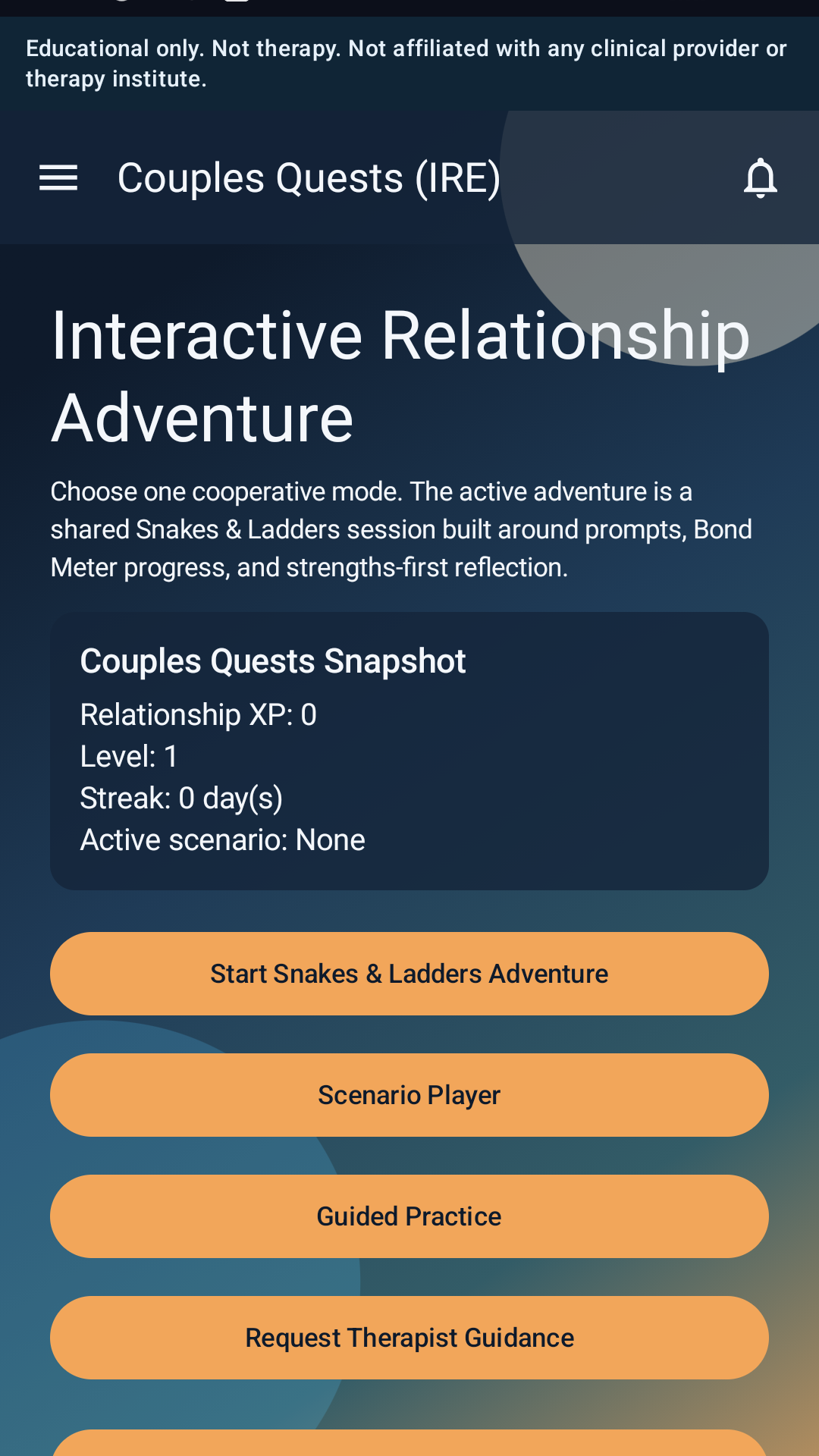
Reflect, understand, choose one next step
A useful educational role
A programme can help people learn communication language, reflect on patterns, practise a conversation, and find an appropriate next step. It should complement—not claim to replace—clinical, crisis, legal, or social services.
Where partnerships may fit
Employers, insurers, wellness programmes, educators, nonprofits, family-support organisations, and community initiatives may explore scoped education or sponsored access. Co-branded programmes can be discussed without promising a clinical or financial outcome.
Privacy-conscious design
Partners should not receive private diary entries, individual assessment answers, or private AI Companion conversations. Aggregate reporting requires appropriate consent, technical support, and legal controls; it must not become individual surveillance.
Claims that need care
Couples Quest does not promise reduced claims, violence, divorce, absenteeism, or guaranteed engagement or return on investment. Education can be valuable without pretending to prove an outcome that has not been established.
Try this
Ask a prospective programme partner what the learner controls, what the sponsor can see, and how a person can opt out.